Call Us Today!
Call Us Today!

Gutter overflow is roof water going over the front edge, or behind the back edge, instead of out through the downspouts. It looks harmless because it lands where rain lands anyway. The difference is concentration: an overflowing run delivers the water from an entire roof plane into a narrow strip of soil along the wall, storm after storm, and in New Orleans that strip of soil is the one thing holding the house steady.
Plenty of the foundation problems this city is famous for do not start at the foundation.
They start above it, at a blocked or sagging gutter that has quietly redirected thousands of gallons a year to the base of the wall. The concrete gets blamed. The water wrote the story.
At Big Easy Gutter, we see the pattern from the top down, because the runs we are called to fix so often sit directly above the wall cracks and sticking doors that prompted the call.
If your gutters overflow in real rain, contact us before the ground under the house starts keeping score.
 A working gutter collects a roof plane’s water and walks it away through the downspouts. An overflowing one turns that collection system against the house.
Water sheets over the front edge and lands in a line along the wall, or worse, runs behind the gutter and tracks down the wall itself. Falling from roof height, it also digs, carving a drip trench along the foundation line and splashing soil against brick and siding, where the masonry slowly wicks the moisture upward. Either way, the soil beside the foundation takes a concentrated soaking that open ground never would, and it takes it in exactly the same line every single storm.
The city’s rain pattern sharpens the effect. New Orleans averages roughly 62 to 66 inches a year, delivered mostly in bursts, so an overflowing run does not drip on the soil. It charges it.
Do the rough arithmetic once and the stakes stop being abstract: a 1,000 square foot roof plane sheds around 600 gallons in a single inch of rain, and an overflowing gutter lays that entire load along a few feet of ground.
One more path deserves naming: overflow at a corner or behind the run also soaks fascia and siding on the way down. That damage belongs to this same failure, even though it shows up on a different repair bill.
Concentrated water beside a foundation is bad everywhere. Here it lands on ground that was already the region’s weak point.
Much of the metro was drained swampland, engineered dry by canals and pumps, and ground like that never fully forgets what it was. The water table sits high, the soil layers compress as they dry, and whole neighborhoods have settled unevenly over the decades. A house here is not resting on rock. It is negotiating with mud, and the negotiation goes best when the moisture around it stays boring and even.
The metro sits on layers of clay, silt and sand laid down by the river, soils that respond to moisture by swelling and to drying by shrinking and compressing. Ground like this moves on its own schedule even under a well-drained house.
An overflow line along one wall feeds that movement unevenly, wetting one strip of soil while the rest of the lot cycles normally. Uneven moisture is exactly how uneven settlement starts.
On a slab-on-grade house, the soaked strip lets one edge of the slab settle or heave against the rest. The signs read as interior mysteries: doors that stick each summer, cracks climbing from window corners, floors that lean a marble in one direction.
Under a raised house, the same concentrated water pools around individual piers, softening the ground under some and not others. Differential pier settlement follows, and with it the sloping floors this city knows too well.
There is no single clock, and anyone quoting one is guessing. What can be said honestly is how the damage compounds.
A single storm’s overflow drains and mostly dries. A season of it keeps the strip beside the wall wetter than the surrounding ground for weeks at a time. Years of it give the soil a permanent moisture pattern the rest of the lot does not share, and the structure above slowly conforms to the ground below.
Summer is when the pattern does its damage fastest, because the contrast is sharpest: the yard bakes dry between storms while the overflow strip stays charged, and it is precisely that difference between neighboring soil, wet here, dry there, that moves a foundation unevenly rather than all at once.
Rate matters as much as duration. A slow drip line wets the surface, while a full roof plane arriving in one line during a summer burst drives water deep along the wall, down to the depths where the soil actually carries the house. That is why one bad season of overflow can move the needle further than years of ordinary rain.
The practical takeaway is not fear, it is sequence. Gutter overflow is among the cheapest problems on a house to fix, and foundation movement is among the most expensive. Every month of the first buys ground toward the second.
Watch for the early signs on the outside: soil along one wall that stays damp days after rain, mulch or bedding washed out in a line, staining down the wall below a gutter joint, or a trench-like depression under the roof edge.
The fix is not one action but a short chain, and every link has to hold.
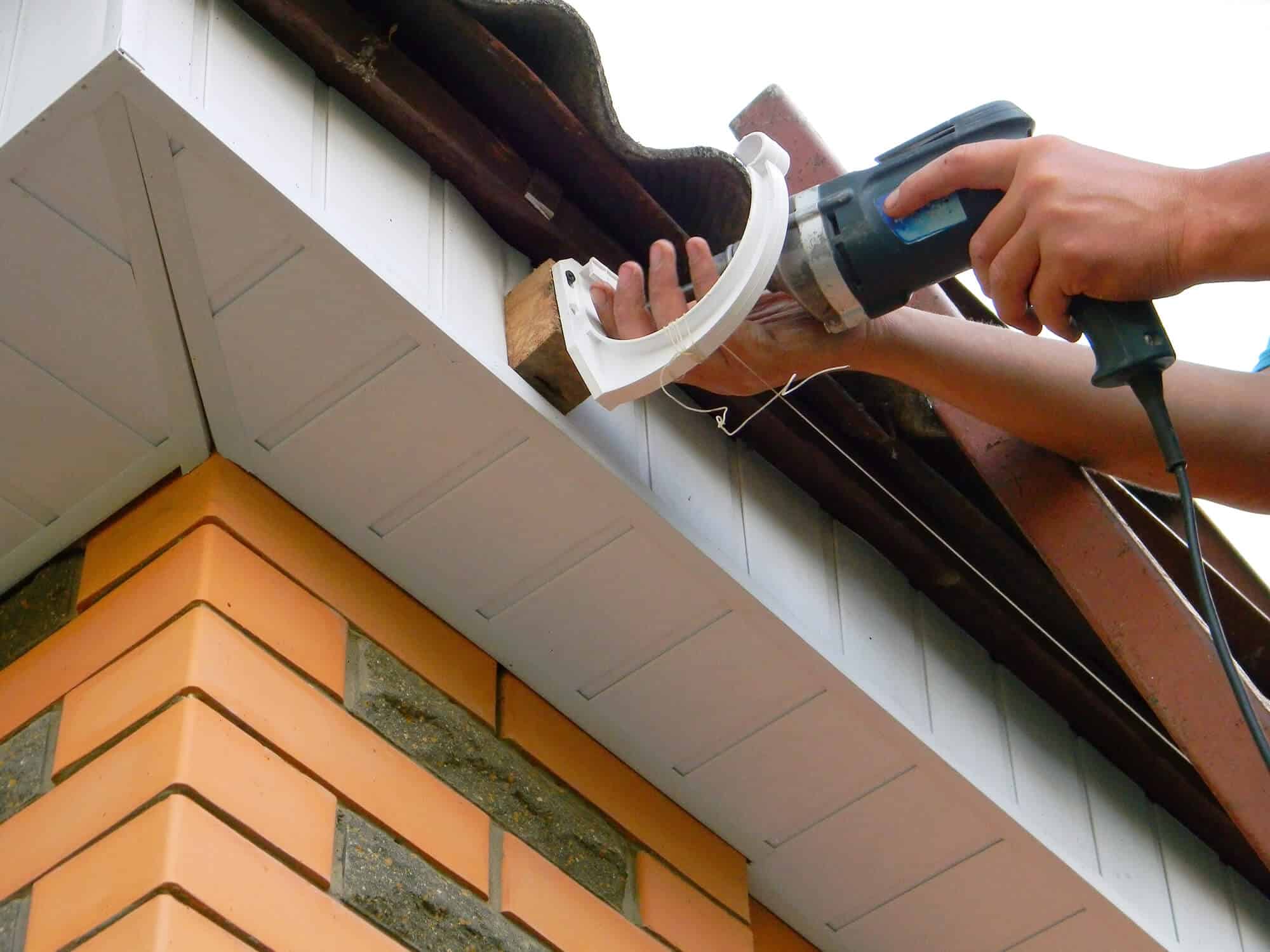 Overflow starts with water that cannot get out: debris in the trough, a felted outlet, or a downspout blocked somewhere inside. Clearing the system end to end, and confirming flow at the bottom of every downspout, is always step one.
The best diagnostic costs nothing: step outside during a hard rain and watch the runs. Where water sheets over, where it exits, and where it merely dribbles from a downspout that should be roaring tells you in five minutes what no dry-day inspection can.
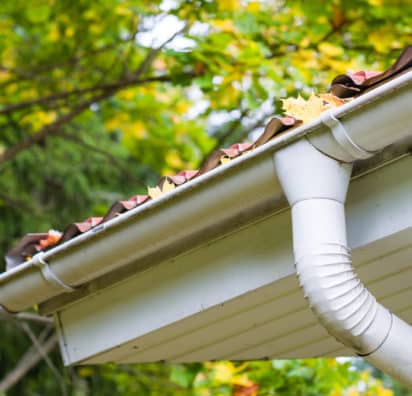
If a clean gutter still spills, the run itself is the problem. Sags hold ponds that tip over the edge, separated seams leak against the wall, and an undersized system simply cannot carry a New Orleans downpour. That is gutter repair work, or on a run past saving, a gutter replacement sized for the roof it serves.
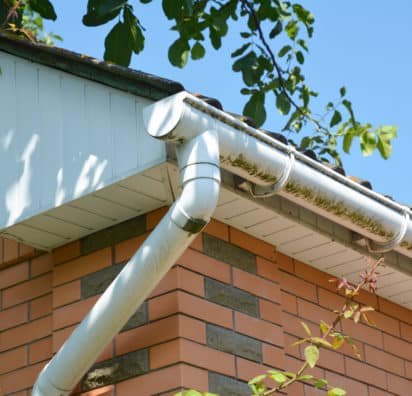
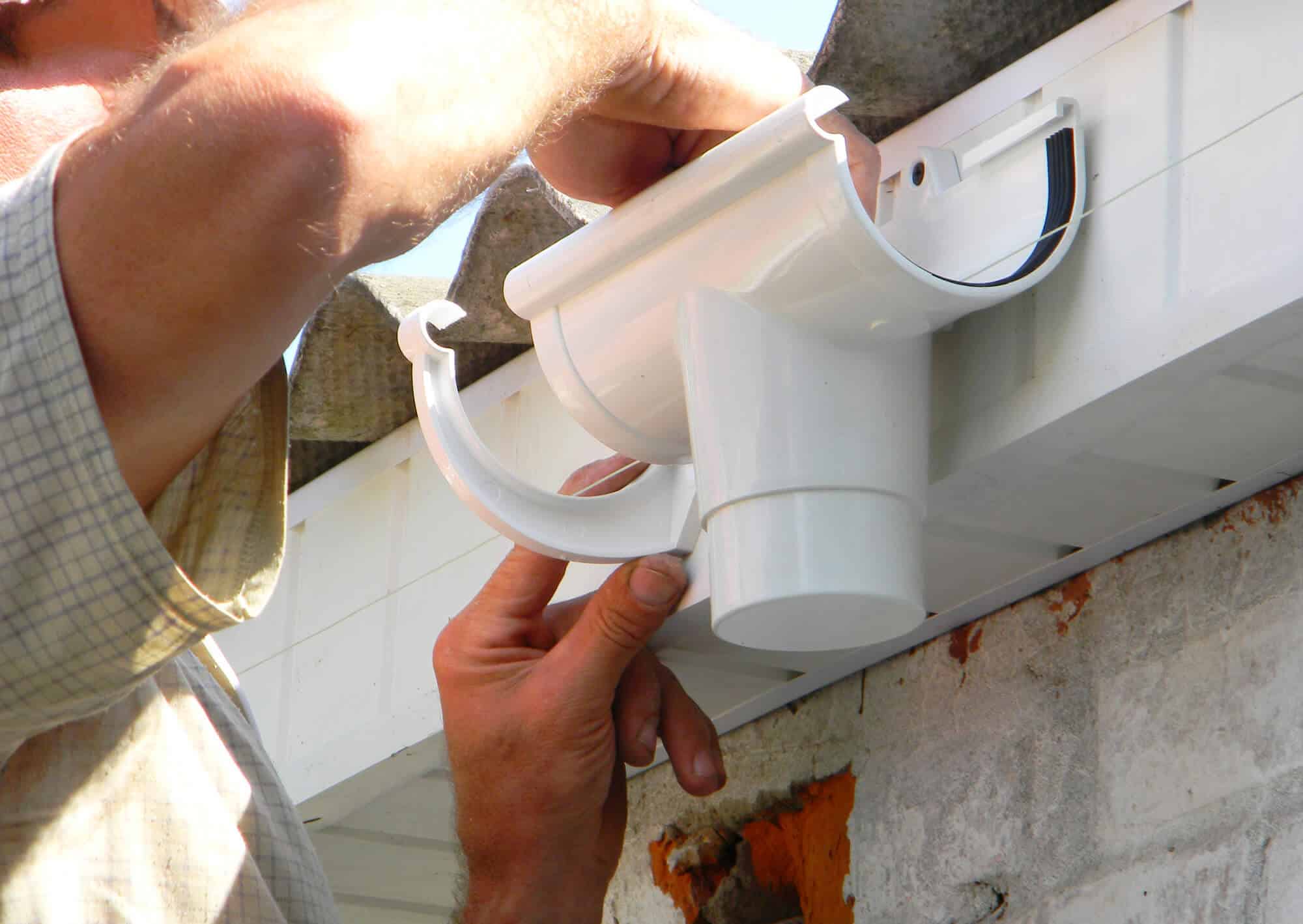
Water that exits a downspout and stops at the wall base has only shortened its journey to the same soil. Extensions and splash blocks that carry discharge several feet out, onto ground that slopes away, finish the job the gutter started. On new work, planning discharge routes is part of proper gutter installation, not an accessory.
One honest boundary: if the structure already shows movement, a gutter company stops the water and a foundation professional assesses the house. Both matter, in that order.
And once the chain is fixed, it stays fixed cheaply: a seasonal clearing, a glance at the discharge points after storms, and the same five-minute watch during the next hard rain. Foundation protection at the gutter level is mostly the discipline of noticing.
Every foundation in this city sits on soil that answers to water, and the gutters are the instrument that decides where that water lands. Kept clear, sound and properly discharged, they quietly protect the most expensive thing on the lot. Overflowing, they concentrate the whole roof’s rain on the one strip of ground that can least afford it.
The order of repair costs is the whole argument: clearing a gutter costs the least, repairing a run costs a little more, and the foundation work that unmanaged water eventually invites costs more than every gutter the house will ever need.
If your runs spill in heavy rain, our team at Big Easy Gutter will find out why and put the water back where it belongs. Call us at (504) 208-2247 to get it looked at before the next storm feeds the ground again.
Yes, and the mechanism is concentration rather than volume alone. An overflowing run delivers an entire roof plane’s water to a narrow strip of soil beside the wall, storm after storm, and New Orleans soils respond to that uneven moisture by swelling, shrinking and settling unevenly. The foundation above conforms to the ground below over time. Stopping the overflow is the cheap end of that chain.
Look outside before inside. Soil along one wall that stays damp days after the rest of the yard has dried, a washed-out line in mulch or bedding under the roof edge, staining down the wall below a gutter joint, or a shallow trench forming beneath the run are all earlier signals than anything the structure itself will show.
It does, with the damage arriving through the piers instead of a slab edge. Concentrated water pooling under the house softens the ground beneath some piers and not others, and uneven pier settlement produces the sloping floors common in older raised homes. Discharge routing matters just as much under a raised house.
Far more than intuition suggests. A 1,000 square foot roof sheds around 600 gallons in a single inch of rain, and this city averages more than sixty inches a year. An overflowing gutter concentrates that entire load along a few feet of soil, which is why the damage pattern is so consistent.
Because looking clean from the ground is not the same as flowing. Felted debris at the outlet, a blockage inside the downspout, a sag ponding water mid-run, or a system undersized for the roof all overflow with a spotless-looking trough. If a cleaning does not stop the spilling, the run itself needs assessment.
They are among the highest-value few dollars on the whole house. A downspout that releases at the wall base has moved the roof’s water sideways, not away. Getting the discharge several feet out onto ground that slopes off changes where the entire roof load ends up.
It does, and the wall usually shows it first. Water running behind a gutter soaks the fascia board until it rots and stops holding fasteners, streaks and stains the siding, and splashes a tide line of soil onto the lower wall, where brick slowly wicks the moisture upward. Those surface symptoms are worth reading as the early warning system for the ground problem developing below them.
If the visible problem is water, spilling, staining, damp soil, start at the gutters, because that is the cause and the cheap fix. If the house already shows movement, sticking doors, stair-step cracks, sloping floors, bring in a foundation professional for the structure while the gutter side stops the water. The two jobs are different trades and both have their place.


 Big Easy Gutter