
On a Gretna street after a summer thunderstorm, the water has a long way to travel and not much slope to help it. Roof runoff joins the yards and the street, and the drains carry what they can. Whatever your gutters drop beside the house stays there longer than you would like.
Gutter trouble in Gretna builds from more than one bad storm. It grows out of heavy rain arriving in bursts, on low ground, around houses that were mostly built decades ago.
The City of Gretna says plainly that all Gretna properties are at risk of flooding from rain, in any season. Gutters do not stop street flooding, but they decide where your own roof water lands.
Here at Big Easy Gutter, we install, repair and replace gutters across Gretna and the rest of the New Orleans area.
This guide looks at what Gretna’s rain, drainage, housing age and historic districts mean for the gutters on your house, and which city rules are worth knowing before any work starts.
If you want a second look at where your roof water goes after a storm, contact us and we will look at your roof, your trim and where the water ends up.
What Heavy Rain Means for a Gretna Roofline
Gretna’s rain is heavy, frequent and fast. That combination tests a gutter system far more than the annual total suggests.
A Year of Rain in Big Bursts
NOAA’s 1991 to 2020 climate normals for its New Orleans Audubon station put average rainfall at 64.6 inches a year. July is the wettest month, at about 8.8 inches.
The more telling number is how that rain arrives. The same normals average about 20.6 days a year with at least 1 inch of rain, out of roughly 78 days with a tenth of an inch or more.
A day with an inch or more is the kind of rain that finds every clog, loose seam and short downspout on a house.
The Storms the City Plans Around
 The City of Gretna’s Stormwater Master Plan uses NOAA Atlas 14 rainfall depths for six-hour storms. The storm Gretna should expect about once a year brings 3.44 inches in six hours, and the 10-year storm brings 5.93 inches.
The plan also notes that the city’s pipe network can handle small, low intensity rain events, but intense or prolonged rainfall leads to street flooding. In those storms, the streets act as what the plan calls the channel of last resort.
That matters at the house level. When the street is already full, roof water dumped at the foundation has nowhere quick to go.
Ground With Little Room to Drain
The city explains that flood water collects because much of Gretna lies at or below sea level, on land prone to subsidence. Water leaves the city through pipes and canals using gravity drainage.
The Stormwater Master Plan describes the path rain takes: it collects on rooftops, yards and streets before flowing into the pipe network. Your gutters are the first step in that chain, and the only step you control.
Common Gutter Problems in Gretna Homes
Most gutter problems here fall into a few patterns. Each one puts water against the house instead of moving it out to the yard and the street.
Overflow From Clogged or Undersized Runs
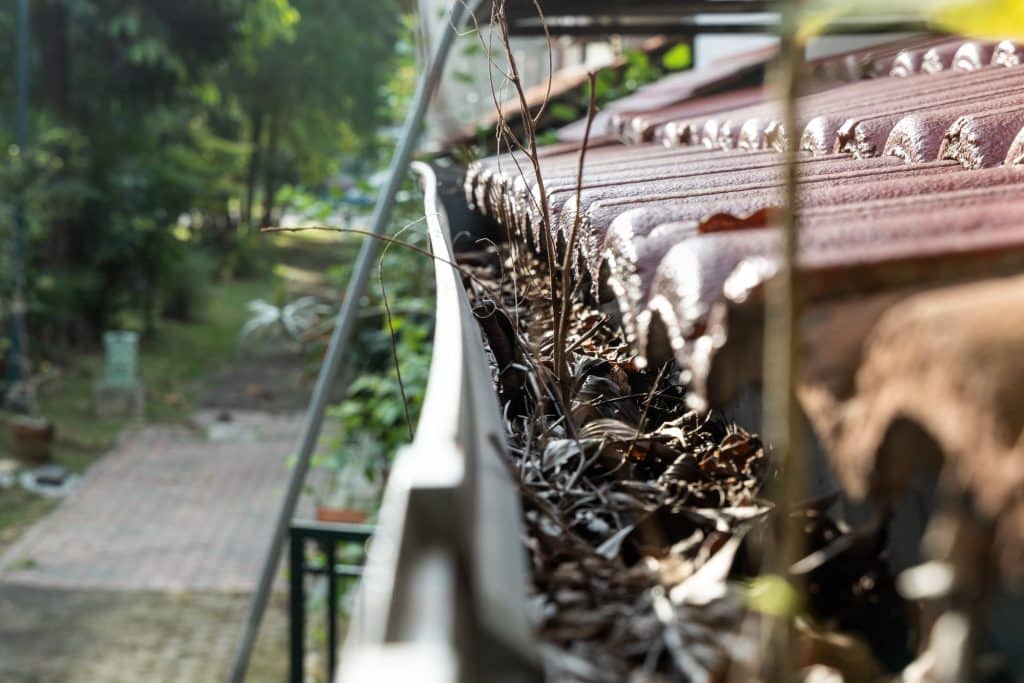
A gutter packed with leaves, seeds or roof grit spills over its front edge in exactly the kind of inch-plus storm Gretna sees about 20 times a year. So does a gutter that is simply too small for the roof area feeding it.
The water then sheets down the wall and lands in a line along the foundation. Our post on how gutter overflow damages a New Orleans foundation covers what that repeated soaking does below grade.
Downspouts That Release Water at the Wall
A downspout gathers water from a large section of roof and lets it out in one spot. If that spot is right at the foundation, on low and fairly flat ground, the water tends to sit.
The City of Gretna’s historic district guidelines give the same advice for masonry foundations: direct downspouts and splash blocks away from the foundation. We go through the options in our guide on where downspout water should go on a New Orleans lot.
Older Systems on Older Houses
Gretna’s housing is old by most measures. The Census Bureau’s 2020 to 2024 American Community Survey estimates 8,352 housing units in the city, with about 73 percent built before 1980.
The median year built is 1966. The 1960s alone account for about 21 percent of homes, and about 16.5 percent were built in 1939 or earlier.
These are survey estimates with margins of error. Still, they mean many Gretna gutters are hung on fascia boards that have seen decades of rain, and some systems have been patched more than once. Kenner’s homes are newer on average, and our guide to what Kenner housing data says about gutter problems looks at the numbers there.
Historic Profiles That Need Matching
Gretna has two historic districts, Mechanickham/Old Gretna and McDonoghville. The city’s design guidelines note that even utilitarian parts such as half-round gutters can contribute greatly to a building’s historic appearance.
The guidelines also record that modern K-style gutters, with their ogee shape, became popular after World War II. On a house built well before that, a K-style run can look out of place.
Warning Signs Your Gretna Gutters Are Falling Behind
Most warning signs are easy to spot from the ground. The best time to look is during a hard rain or within an hour after it.
Water Sheeting Over the Front Edge
Water pouring over the outside lip of a gutter means it cannot carry the flow to the downspout. The cause is usually a clog, a sag that holds water, or a pitch that runs the wrong way.
Note where it happens. Overflow in the same corner every storm points to a specific section, not the whole system.
Stains and Soft Wood Behind the Gutter
Dark streaks on the fascia, peeling paint on the trim or wood that feels soft under the gutter suggest water is getting behind it. Gretna’s guidelines warn that overflowing gutters can let water into exterior walls and damage framing that is not visible from outside.
If the board behind the gutter is already soft, read our post on fascia and soffit rot before deciding on a repair.
Puddles That Outlast the Storm
On a slab house, water standing against the slab edge after the street has drained means the downspouts are delivering more than the ground can take. On a raised house, look for wet soil that stays dark under the floor.
Our guide on how gutters protect slab vs raised homes in New Orleans explains why each house type shows the problem in a different place.
Gutters Pulling Away or Sagging Between Hangers
From the street, sight along the roofline. A run that dips between hangers, leans outward or shows a gap at the fascia will hold water in the low spots and spill it in heavy rain.
A sag also adds weight with every storm, which loosens the next hanger along the run.
How Gretna Gutter Problems Are Diagnosed and Fixed
The fix depends on what the rain shows. A single bad corner and a worn-out system need very different answers.
Checking the System After a Hard Rain
Gretna’s design guidelines recommend that gutters and downspouts be routinely checked to make sure they work and are not clogged with debris. A walk around the house after a heavy storm does most of that job.
Look at each downspout outlet, each corner and each long run. If you are not comfortable on a ladder, keep your checks to what you can see from the ground.
| Approach | What It Handles | Best For |
|---|---|---|
| Clearing and resealing | Clogs, a leaking seam or corner, a blocked downspout | Sound gutters with one or two trouble spots |
| Refastening and re-pitching | Sagging runs, loose hangers, water pooling in low spots | Runs that are intact but no longer drain to the outlet |
| Moving or extending downspouts | Water released at the wall, puddles at the slab or piers | Low, flat lots where water sits beside the house |
| Full replacement | Leaks along the whole run, undersized gutters, rot behind them | Older systems failing in several places at once |
Repair, Replacement and Matching the Profile
Repair makes sense when the trouble is isolated, such as one dripping corner or a short section pulling loose. Replacement makes sense when the same problems show up all along the system or the gutters are too small for the roof.
On a historic Gretna house, the profile matters as much as the size. The city’s guidelines say to retain original gutter styles and call half-round gutters generally more appropriate for historic buildings. Our half-round gutter page shows what that profile looks like.
Permits and Historic District Review
The Gretna Building Department lists repair work among the jobs that need a permit, and it also lists replacing soffit or fascia on Type V unprotected construction. Required permits must be obtained before any work begins.
In the two historic districts, the department adds that all exterior changes visible from the public right-of-way must be reviewed by the Historic District Commission and receive a Certificate of Appropriateness. Whether a given gutter job falls under those rules is a question for the Building Department at 504-363-1563.
Where the Gutter Debris Goes
What comes out of a gutter matters too. Gretna’s Unified Development Code, Section 58-279, makes it illegal to dump debris such as trash, oil, grease or other pollutants in catch basins, drainage ditches or canals.
The city warns that debris can make the drainage system malfunction and increase flooding. Bag the leaves and grit from your gutters for trash pickup instead of sweeping them toward the street drain.
The city also asks residents to help by cleaning the catch basin in front of their property when it starts to fill. A clear basin gives your downspout water somewhere to go once it reaches the street.
What This Means for Your Gretna Home
In Gretna, a gutter system works inside a bigger drainage chain that is already stretched in heavy rain. The job of your gutters is to collect the roof water, carry it to the downspouts and release it where it can drain away from the house.
On an older house, that job also means keeping the system in step with the house itself, from fascia that may need attention to a profile that suits a historic home.
At Big Easy Gutter, we handle gutter repair, replacement and installation across Gretna, and on an older home we assess the whole system before recommending either a repair or a replacement. You can see more about our work on the west bank on our Gretna service area page.
To schedule a free estimate for your Gretna home, call us at (504) 208-2247.
Frequently Asked Questions
How much rain does Gretna get in a year?
NOAA’s 1991 to 2020 normals for its New Orleans Audubon station average 64.6 inches of rain a year. About 20.6 days a year bring an inch or more, and July is the wettest month at about 8.8 inches.
Why does water stand in my Gretna yard after a storm?
The City of Gretna explains that much of the city lies at or below sea level, on land prone to subsidence, and drains through pipes and canals by gravity. Its Stormwater Master Plan adds that intense or prolonged rain overwhelms the pipe network and floods the streets. When the streets are full, water from your roof and yard drains slowly too.
Do I need a permit to repair or replace gutters in Gretna?
The Gretna Building Department lists repair work and replacing soffit or fascia on Type V unprotected construction among the jobs that require a permit. Whether your job needs one depends on the scope, so call the Building Department at 504-363-1563 before work begins.
Do historic district rules apply to gutters in Gretna?
In the Mechanickham/Old Gretna and McDonoghville historic districts, all exterior work visible from the public right-of-way needs review by the Historic District Commission and a Certificate of Appropriateness. The city’s design guidelines say to retain original gutter styles and call half-round gutters generally more appropriate for historic buildings.
Can I put gutter debris in the street drain?
No. Gretna’s Unified Development Code, Section 58-279, makes it illegal to dump debris such as trash, oil, grease or other pollutants in catch basins, drainage ditches or canals. The city warns that debris can make the drainage system malfunction and increase flooding, so bag gutter debris for trash pickup.
How old are most homes in Gretna?
The Census Bureau’s 2020 to 2024 American Community Survey estimates that about 73 percent of Gretna’s 8,352 housing units were built before 1980, with a median year built of 1966. These are survey estimates with margins of error, but they show an older housing stock overall.
Where should my downspouts drain on a Gretna lot?
Downspouts should release water onto ground that carries it away from the house, not against the foundation or the slab edge. Gretna’s historic district guidelines give the same advice: direct downspouts and splash blocks away from the foundation. On a low, flat lot, extensions or a different discharge point often do most of that work.
How often should Gretna homeowners check their gutters?
Gretna’s design guidelines recommend checking gutters and downspouts routinely to make sure they work and are not clogged with debris. A practical habit is to look after every major storm and before the wettest summer months. Homes under large trees usually need more frequent checks.