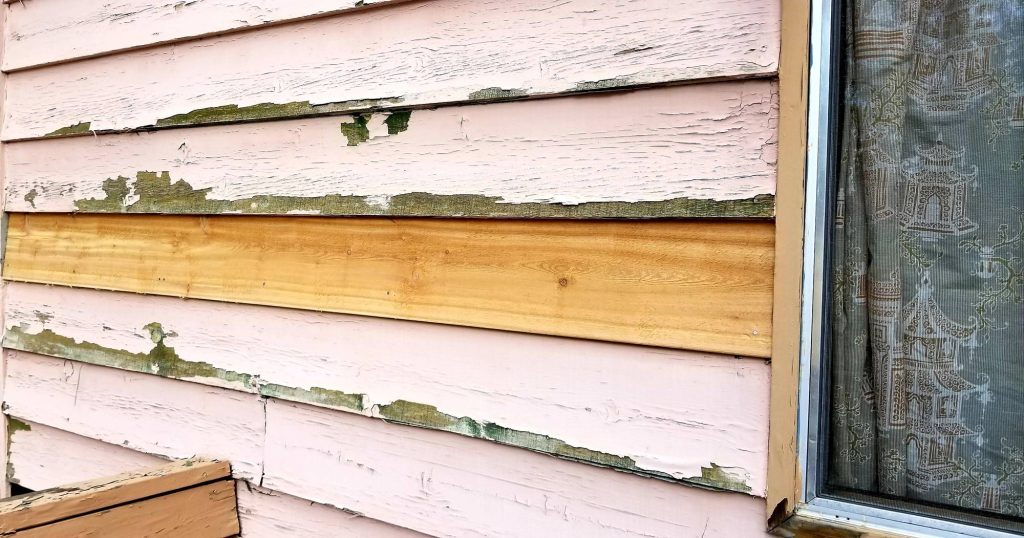
New Orleans gets a lot of its rain in summer: NOAA’s 1991 to 2020 normals put June through August at about 22.9 inches at its New Orleans Audubon station. That is the same stretch of the year when paint on a wet wall starts to blister.
Paint and siding are supposed to last for years. When they fail early on one side of the house, or right under one run of gutter, the cause is often water that the gutters should have carried away.
At Big Easy Gutter, we install, repair and replace gutters for homes across the New Orleans area.
This guide walks through how long exterior paint should last, the paint and siding symptoms that point back to the gutters, and why this climate makes the problem worse.
If the paint under your gutters keeps failing, contact us and we will look at your roof, your trim and where the water ends up.
How Long Should Exterior Paint Last on a New Orleans Home?
Paint on wood should last for many years if the wood stays reasonably dry. Short paint life is usually a moisture problem, not a paint problem.
What the Forest Products Laboratory Expects From Paint
The USDA Forest Products Laboratory’s Wood Handbook says that when paint is properly applied to the right type of wood, it should have a service life of at least 10 years.
If a wall needs repainting after two or three years, something other than ordinary weathering is going on. The Wood Handbook adds that many older homes have wood siding, which is the material most sensitive to that kind of water.
Why Moisture Cuts That Short
The same source is blunt: the most common cause of premature paint failure on wood is moisture. Paint on outside walls is wetted by rain, dew and frost, and water also causes paint to peel.
A wall that gets an occasional soaking can recover. A wall that gets soaked in the same place every storm, because the gutter above it overflows or leaks, never fully dries out between rains.
Which Sides of the House Wear Fastest
Even with dry wood, paint does not wear evenly. The Forest Products Laboratory explains that modern acrylic paints degrade by a slow erosion process, and the areas that deteriorate fastest are those exposed to the most sun and rain, usually the west and south sides of a building.
That kind of wear is gradual and spread across a whole wall. Gutter damage looks different: it is concentrated, it follows the roofline above it, and it often appears on a side of the house that otherwise holds paint well.
Telling the two apart is the first step in a diagnosis. Even, chalky wear across a sunny wall is age. Blisters, stains and peeling in a band under one gutter run are water.
Paint Warning Signs That Point Back to the Gutters
Paint failure from gutter water has a pattern. It shows up below a specific section of roofline, and it gets worse after heavy rain.
Blisters That Appear After Rain: Water Trapped Behind the Paint
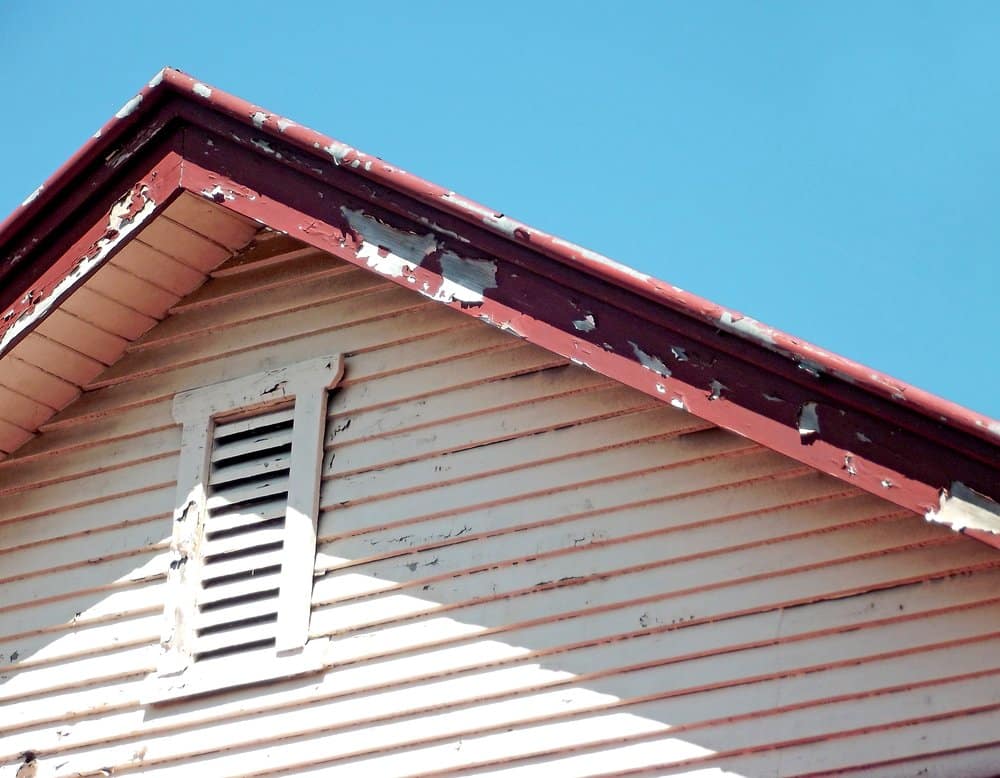 The Wood Handbook describes moisture blisters as bubble-like swellings of the paint film on the wood surface. They can form where rain enters through joints and other end-grain areas of boards and siding.
According to the FPL chapter, these blisters appear after spring rains and throughout the summer. They may dry out and collapse, and in severe cases the paint peels.
These blisters form between the wood and the first coat of paint, so the water is sitting behind the paint film, in the wood itself. The handbook adds that thin coats of new paint blister most readily, while old, thick coats tend to crack and peel instead.
That second point matters on older New Orleans houses with many layers of paint. On those walls, gutter water may show up as cracking and peeling rather than as bubbles.
If blisters line up under a gutter corner or a seam, that joint is the first place to look. Water running over or behind the gutter is reaching the siding below it.
Reddish Brown Streaks Below a Lap: Stains Carried Out by Water
Some woods contain water-soluble extractives, natural compounds that give species such as western redcedar and redwood their color. When water dissolves them and carries them to the painted surface, it leaves a reddish brown stain behind.
The Wood Handbook names faulty roof drainage and gutters as one cause of this staining. It also describes a run-down, streaked version that appears when water drains into exterior walls from roof leaks or faulty gutters and then runs down the face of the board below the lap.
These streaks are a useful clue because they show where the water came from. A stain that starts at the top of a wall, under the eave, points to the roof edge.
Peeling Concentrated Under One Run: A Repeat Wetting Zone
Paint that is sound on most of the house but peeling in a band under one section of gutter is one of the clearest signs of gutter trouble. That band is where overflow sheets down the wall in heavy rain.
The Wood Handbook notes that paint failure is most severe on the sides of buildings facing the prevailing winds and rain. A gutter that overflows on that side adds even more water to the wall that already takes the most weather.
Look up at the gutter directly above the peeling. A sag, a clog or a pulled-away section is usually right there.
Siding Warning Signs That Your Gutters Are Overflowing
Siding shows gutter water in its own ways. Some of these signs are cosmetic at first, but they all mean the wall is staying wet.
Dark Growth Near Trees and Eaves: Mildew on a Damp Wall
The Wood Handbook calls mildew probably the most common cause of house paint discoloration. It grows most extensively in warm, humid climates, which describes New Orleans for much of the year.
The FPL text adds that mildew is most common on walls behind trees or shrubs, where air movement is restricted. Those are often the same walls that sit under gutters filled with leaves from the same trees.
Dew plays a part too. The same chapter notes that dew forms on parts of the house that cool quickly, such as eaves and porch ceilings, and that dew feeds mildew. Add gutter overflow to a wall that already collects dew and it has little chance to dry.
If you are not sure whether a dark patch is mildew or dirt, a painter or a professional cleaner can tell you. What matters for the gutters is that the patch keeps coming back where water keeps landing.
Splash Marks Along the Bottom Courses: Downspout Splashback
A downspout that empties onto hard ground or a short splash pad can throw water back against the lowest boards of siding. Over time those bottom courses show dirt splash, staining and peeling first.
The EPA’s guide to mold and moisture recommends making sure the ground slopes away from the foundation so water does not collect around it. Water that stays at the base of the wall keeps splashing and wicking up into the lowest boards.
Our guide on where downspout water should go on a New Orleans lot covers how to move that discharge away from the wall.
Board Ends That Fail First: Water Getting Into the Wood
The Wood Handbook explains that the end grain of wood absorbs moisture much faster than the face grain, and finishes generally fail at the end grain first. On lap siding, that means board ends at corners, windows and trim.
When those ends sit under a dripping gutter corner, they take water every storm. Peeling, darkening or softening at board ends under a corner is a sign the gutter there is leaking.
If the trim or fascia behind the gutter is already soft, our post on fascia and soffit rot explains what that means for the roofline.
Streaks of Water on the Wall After the Rain Stops
Walk around the house an hour after a heavy storm. Siding that is dry in most places but still wet in a vertical stripe under the gutter is getting water from above.
That stripe is the same zone where blisters, stains and mildew show up later. Catching the wet stripe early is easier than repairing the paint afterward.
Why New Orleans Homes Are Especially Hard on Paint and Siding
Climate, trees and older wood siding all stack up here. Each one makes gutter water more damaging than it would be in a drier place.
| Factor | Effect on Paint and Siding | What Helps |
|---|---|---|
| Heavy summer rain | Overflow soaks the same wall section storm after storm, the season blisters appear | Gutters sized and pitched to carry the flow to the downspouts |
| Warm, humid air | Wet walls dry slowly and mildew grows readily on damp paint | Keep roof water off the wall so it has a chance to dry |
| Trees over the roof | Leaves clog gutters, and shaded walls behind trees hold moisture | More frequent clearing or a leaf guard system |
| Older wood siding | Board ends and laps soak up water and fail first | Seal leaking gutter corners and seams above them |
The pattern in every row is the same. Each factor does its damage through the water that reaches the wall.
The rainfall numbers explain why this matters so much here. NOAA’s normals put the New Orleans Audubon station at about 64.6 inches of rain a year, and the three summer months alone bring close to 23 of those inches.
That summer rain falls in the warmest, most humid part of the year. A wall soaked by an overflowing gutter in July is also a wall sitting in the conditions the Forest Products Laboratory says mildew likes best.
Overhangs help as well. The Wood Handbook lists an adequate roof overhang alongside well-kept gutters and downspouts as a first defense for wood siding, because both keep water off the wall face.
The EPA’s mold and moisture guide puts it simply: the key to mold control is moisture control, and one of its first prevention tips is to clean and repair roof gutters regularly.
On homes under heavy tree cover, a leaf guard system can cut down on the clogs that cause most overflow. Moisture at the wall line also draws pests, which our post on moisture, termites and dry walls covers.
Protect Your New Orleans Paint and Siding Before the Next Repaint
The Wood Handbook says the only practical way to prevent moisture blisters is to eliminate the moisture problem. Its first step is to keep the wood dry, including properly maintaining the gutters and downspouts.
That makes the order of work simple. Fix the water source first, then repaint, or the new paint will fail in the same place.
The good news is that some damage fades on its own. The Forest Products Laboratory notes that extractive stains usually weather away within a few months once the water causing them stops.
At Big Easy Gutter, we handle gutter repair for isolated leaks and sags, and gutter replacement when the whole system is failing or too small for the roof. Estimates are free.
To have your gutters checked before your next paint job, call us at (504) 208-2247.
Frequently Asked Questions
Can bad gutters damage siding and paint?
Yes. The USDA Forest Products Laboratory names moisture as the most common cause of premature paint failure on wood, and it lists faulty gutters as a source of the water that stains and damages painted siding. Overflow and leaking seams deliver that water to the same section of wall in every storm.
How do you know if gutters are bad?
Watch them during a heavy rain. Water spilling over the front edge, dripping from seams or corners, or pouring out of a sagging section means the gutter is not carrying the flow to the downspout. Blistering, staining or peeling paint in a band below one section is another strong clue from the wall side.
Should you replace gutters when replacing siding?
It is worth having the gutters checked at the same time. If the old gutters overflow or leak, they will keep wetting the new siding, and the Forest Products Laboratory’s first step for protecting wood siding is keeping it dry by maintaining the gutters and downspouts.
Why is my paint peeling on only one side of the house?
The Wood Handbook notes that paint failure is most severe on the sides of buildings that face the prevailing winds and rain. If that side also has an overflowing or leaking gutter, the wall below it gets far more water than the rest of the house.
What causes reddish brown streaks on painted siding?
Water-soluble extractives in some woods dissolve in water and leave reddish brown stains as the water dries on the paint. The Wood Handbook lists water from faulty roof drainage and gutters as one cause.
Will the stains go away after the gutters are fixed?
Extractive stains usually weather away within a few months once the water causing them is stopped, according to the Wood Handbook. Stains in protected areas can get darker over time, so ask a painter about cleaning them.
Will repainting fix paint that keeps blistering?
Not on its own. The Wood Handbook says eliminating the moisture problem is the only practical way to prevent moisture blisters, so the water source has to be fixed first. Otherwise the new coat is likely to fail in the same spot.
Is gutter damage covered by homeowners insurance?
It depends on your policy. Check with your insurance company or agent about what your coverage includes before you plan any repairs.